
About Us

Bedtime Songs and Stories

Designed for parents, teachers, and community organizations who want simple, engaging resources to help children ages 3 and up build strong money habits. Through songs, stories, and conversations, kids begin developing the habits and mindsets that support lifelong financial well-being, self-sufficiency, and the ability to turn dreams and goals into reality.

Our Mission

Our mission is simple: make it easy, fun, and genuinely effective for parents, teachers, and community leaders to teach kids about money — starting early — so they grow up confident, capable, and ready to build bright futures.

Meet the Creator: Sam X Renick

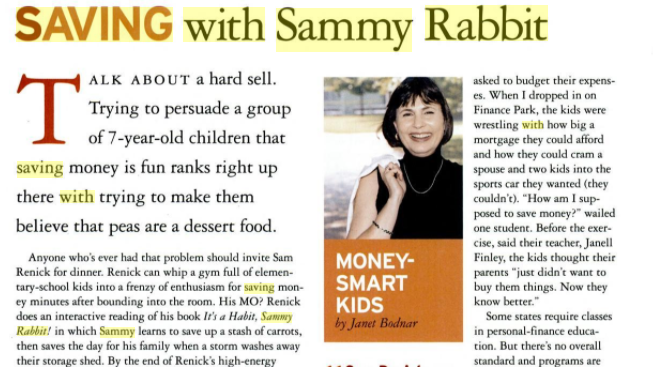
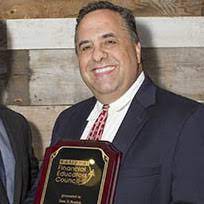
Sam X Renick is the co-creator of Bedtime Songs and Stories and SammyRabbit.com. An award-winning financial educator and children's author, Sam brings more than 25 years of expertise helping kids and families build essential money habits.

His programs weave together storybooks, music, dream-big journaling, games, live events, and more — and they've been embraced by families and organizations worldwide, including the Department of Defense, United Way, the University of Texas at Tyler, Girl Scouts of America, the Wisconsin Bankers Association, Citi, banks, credit unions, and schools across the country.

Sam's insights have been featured in the New York Times, Washington Post, NPR, Kiplinger, Forbes, KNX, and beyond. His sustained impact in the field has earned him numerous honors, including the New Jersey Financial Education Coalition Lifetime Achievement Award, the National Financial Educators Council Educator of the Year Award, and the California Jump$tart Coalition Leaders in Financial Literacy Award.
See Sam's Track Record →

Sam X Renick

Our Friend and Partner: Sammy Rabbit

Although we are a separate enterprise, we share a close relationship — and a common heart — with Sammy Rabbit, a long-standing leader in early childhood financial education. Our missions are deeply aligned: helping children build strong money habits that support lifelong financial well-being.

For decades, Sammy Rabbit has been inspiring families, schools, and communities through engaging songs, stories, lesson plans, and standards-aligned resources that make financial education simple, positive, and habit-focused.

We warmly encourage you to explore the additional resources available at SammyRabbit.com, where you'll find expanded programs, classroom materials, books, activities, and tools to deepen your child's financial learning journey.

Sammy Rabbit Logo

Frequently Asked Questions

Who are these resources for?

These resources are designed for parents, teachers, caregivers, and anyone who wants to help children build life-changing money habits early. Our goal is simple: put kids on a path toward lifelong financial well-being — security, stability, independence, and opportunity — and position them to pursue their dreams and help others do the same.

The resources are especially well-suited for children in grades K–3, when foundational habits are forming and repetition has its greatest impact.

And while the collection is called Bedtime Songs and Stories, these resources are made to be used anytime, anywhere — at home, in the classroom, in after-school programs, or during family conversations. Wherever children are learning, strong money habits can take root.

Why does teaching financial literacy early matter?

Teaching children about money matters more than most parents realize — because money habits start forming as early as age seven. In today's consumer-driven world, kids are constantly surrounded by messages that encourage spending, impulsiveness, and instant gratification, often long before they've learned about saving, budgeting, or waiting for something they really want.

When parents intentionally build healthy money habits early, they give their children far more than financial knowledge. They give them confidence, independence, less stress, the ability to handle unexpected setbacks, freedom from living paycheck to paycheck, and the capacity to be generous with others.

Financial literacy isn't about raising little accountants. It's about building lifelong habits — understanding wants versus needs, saving consistently, spending intentionally, and preparing for the unexpected. Because most schools still offer limited financial education, these conversations often fall to parents.

The good news? You don't need to be a financial expert. Simply starting open, consistent conversations about money helps shape a healthier, more confident future for your child.

Why focus on habits rather than knowledge?

Most adults already know what they should do with money — save, avoid debt, spend less than they earn. Yet many still struggle. The gap isn't knowledge. It's habits.

Research and real-life experience show that lasting behavior change doesn't come from information alone. It comes from repetition, emotion, and early exposure. Habits form when actions are practiced consistently, tied to positive feelings, and built during the years when the brain is still developing. Once a habit is formed, it runs on autopilot — no willpower required.

That's why our approach is different.

We don't just teach money facts. We help children build money habits.

Through songs and stories, children experience repeated, emotionally positive messages about saving first, spending smart, waiting before buying, planning for the unexpected, and knowing where money goes. Music is especially powerful here — rhythm and melody strengthen memory pathways in the brain, and studies show that information paired with music is retained longer and recalled more easily. Stories add emotional meaning, and emotion is what truly locks habits into place.

When a child sings about saving, hears stories about waiting, and talks about money regularly with the people they love, they aren't just learning concepts. They're wiring patterns.

Over time, saving becomes automatic. Waiting becomes normal. Planning becomes second nature.

That's the goal — not a child who knows about money, but a child who practices strong money habits without needing constant reminders.

Knowledge informs. Habits transform.

Why start teaching money habits so early?

Because childhood is the most powerful window you'll ever have.

Research in behavioral science and neuroscience suggests that core money habits and attitudes are largely formed by age seven. During these early years, the brain is highly adaptable. Patterns repeated consistently — especially those tied to emotion and daily routine — become wired pathways. What children practice early begins to feel "normal." And what feels normal tends to last.

This is why waiting until the teenage years to have serious money conversations often misses the mark. By then, spending impulses, emotional reactions, and behavioral patterns may already be well established. Early childhood, on the other hand, is still a shaping stage — habits are forming, scripts are being written, and defaults are being set.

That's not a reason to worry. It's a reason to act with confidence.

If you've ever thought, "Isn't my child too young to learn about money?" — the research says the opposite. Early exposure doesn't mean complex lessons about investing or credit scores. It means simple, repeated experiences: saving a little, waiting before buying, talking calmly about choices, watching money grow toward a goal.

These small moments add up.

When children grow up hearing consistent messages about saving, earning, giving, and spending wisely — and when they practice those behaviors in simple, everyday ways — they build automatic patterns that carry into adulthood.

Starting early isn't about pressure. It's about protection and preparation.

The earlier strong money habits form, the more time they have to strengthen — and the less likely your child is to struggle later trying to unlearn unhealthy ones.

It's not too early. In fact, it's exactly the right time.

How It Works

Teaching a three-year-old about money isn't about spreadsheets or interest rates — it's about building the right foundations at the right time. Research shows that core money habits are largely formed by age seven. Our strategy is designed to reach children during this "Golden Window" using the tools they naturally love: music, stories, and play.

We follow a simple, proven four-step cycle: Sing. Read. Discuss. Reinforce.

Step 1 — Sing: A Sticky Start

Music is a habit-building superpower. Unlike a lecture, a song can be repeated dozens of times without losing its magic.

The Goal: Plant "sticky" financial vocabulary — like Earn, Save, Spend, and Give — into a child's long-term memory.

The Outcome: When a child hums "Follow the Money Rules," they aren't just singing. They're internalizing a lifelong financial formula.

Step 2 — Read: Context and Character

Stories take abstract ideas and make them human. Through the short stories that accompany each song, children see money as a tool for solving problems, achieving goals, and chasing dreams.

The Goal: Build emotional intelligence around money.

The Outcome: Children stop seeing money as "magic plastic" and start understanding it as the result of effort — and a path to something meaningful.

Step 3 — Discuss: Making Money a Safe Topic

Money is often a taboo topic at home, which can create anxiety that lasts well into adulthood. We give parents and teachers simple prompts and conversation starters to break the ice.

The Goal: Make money a safe, curious, and open topic of conversation.

The Outcome: When a child answers a question like "What's something you'd like to save for?" they're practicing one of the most important financial skills of all: intentionality.

Step 4 — Reinforce: Learning by Doing

This is where transformation happens. Our resources are habit-centered by design.

The Goal: Move from understanding to muscle memory.

The Outcome: Through small, consistent actions — like dropping a coin in a jar or choosing between two snacks — children build the "waiting muscle" (delayed gratification) that research links to long-term success.

Why It Works: More Than Money

Our approach isn't just about financial IQ — it's about building executive function skills that serve children for life. By working through these four steps, children naturally practice:

You don't need to be a financial expert to give your child a head start. You just need to press play.